Burned out caring for Mom or Dad?
If you are exhausted, short-tempered, and quietly wondering how much longer you can keep this up, you may be experiencing caregiver burnout — and counseling can help. Caring for an aging parent is one of the most loving things a person can do, and one of the most draining. It is also one of the least talked about.
Maybe you are the one who drives to every appointment, manages the medications, and takes the late-night calls. Maybe you are juggling your own kids, your job, and your marriage at the same time — the "sandwich generation." Maybe your parent has dementia and some days doesn't recognize you. Or maybe you live farther away and carry the worry and the guilt from a distance. However it looks for you, you do not have to hold all of it alone.
What are the warning signs of caregiver burnout?
Caregiver burnout usually builds slowly, so many people don't notice it until they are running on fumes. Common warning signs include:
- Exhaustion that sleep doesn't fix — feeling tired all the time, even on "easier" days
- Irritability and resentment — snapping at your parent, your spouse, or your kids, then feeling guilty about it
- Pulling away — dropping friendships, your faith community, hobbies, or anything that used to recharge you
- Changes in sleep or appetite — sleeping poorly, eating too much or too little
- Neglecting your own health — skipping your own doctor visits, getting sick more often
- Constant worry — waiting for the next phone call, the next fall, the next crisis
- Feeling hopeless or numb — like nothing you do is enough, and nothing will change
- Losing yourself — feeling as though "caregiver" is the only identity you have left
If several of these sound familiar, it is not a sign that you are failing your parent. It is a sign that you need care, too. Burnout can also overlap with real, treatable anxiety and depression, which is one more reason to reach out.
If you are having thoughts of harming yourself — or you are afraid you might hurt the person you care for — please reach out right away. Call or text 988 to reach the 988 Suicide & Crisis Lifeline, free and confidential, 24/7. If anyone is in immediate danger, call 911. Reaching the end of your rope is a signal to get help, not something to be ashamed of.
Why does caring for an aging parent feel so heavy?
Caring for a parent is heavy because it combines hard physical work with some of the deepest emotions a person can feel. Few roles mix love, duty, history, and loss quite like this one:
- Role reversal — the parent who once took care of you now depends on you, and that shift can be disorienting for both of you
- Guilt that never lets up — no matter how much you do, it never feels like enough
- Resentment you don't want to feel — about lost time, lost plans, or siblings who aren't helping
- Old family wounds — caregiving can stir up childhood hurts, especially if the relationship was always complicated
- Strain on your marriage and kids — the people at home often get what is left of you at the end of the day
- Grief in slow motion — watching a parent's health, memory, or personality change over time
All of these feelings can be true at once. You can love your parent deeply and still feel worn out, angry, and sad. Counseling makes room for every part of it.
If the parent you are caring for was critical or controlling when you were growing up, our narcissistic family recovery counseling may also help.
How can counseling help a caregiver?
Counseling (talk therapy) helps caregivers by giving them a steady, private place to unload, think clearly, and make a plan that includes their own well-being. In sessions with Ginny, you can work on:
- Easing guilt that isn't yours to carry — separating what is truly your responsibility from what isn't
- Boundaries and limits — saying yes to what you can sustain and no to what you can't, without abandoning your parent
- Sibling and family conflict — preparing for hard conversations about who does what, and how to ask for help
- Big decisions — sorting through feelings about in-home help, assisted living, or memory care
- Anticipatory grief — making space to grieve the parent you are slowly losing, even while they are still here
- Stress, anxiety, and low mood — practical, evidence-based tools to calm your body and mind
- Finding yourself again — reconnecting with the people, faith, rest, and interests that keep you going
Why work with a counselor who is also a nurse?
Ginny Porowski is both a registered nurse (RN) and a licensed clinical mental health counselor (LCMHC), so she understands the medical side of caring for an aging parent as well as the emotional side. That combination is uncommon. When you talk about a parent's declining health, a new diagnosis, a hospital discharge, medication worries, or the changes that come with dementia, you won't have to explain the basics. She gets it.
Her role in your sessions is to be your counselor — not your parent's nurse or doctor. But her nursing background helps her understand what you are facing day to day, and can help you feel more prepared for conversations with your parent's care team.
How can counseling help when a parent has dementia?
Counseling gives dementia caregivers a place to grieve the changes in their parent, cope with difficult moments, and keep caring without losing their own health. Caring for a parent with Alzheimer's disease or another form of dementia brings its own kind of exhaustion and grief. The parent you knew may be changing in front of you — forgetting names, repeating questions, becoming confused, suspicious, or upset in ways that are hard not to take personally, even when you know it's the disease. Sessions can also help you manage the constant vigilance that dementia care often requires.
What if my siblings aren't helping?
Counseling can help you decide what to ask your siblings for, prepare for those conversations, and protect your peace when others don't step up. Conflict between siblings over a parent's care is one of the most common — and most painful — parts of caregiving. Often one adult child ends up carrying most of the load, while others live farther away, disagree about decisions, or seem not to see how hard it is. Old family roles can come right back to the surface.
How do I decide about assisted living or memory care?
There is rarely a perfect answer about when a parent needs more care, but counseling can help you make a decision you can live with. Many adult children feel torn between a promise they once made ("I'll never put you in a home"), their parent's wishes, their own limits, and what is truly safest. Together we can untangle the guilt, weigh what matters most to you and your family, and help you move forward with more peace — whatever you choose. Medical, financial, and legal questions still belong with your parent's doctors and the appropriate professionals.
Is it normal to grieve a parent who is still alive?
Yes. Grieving a parent while they are still alive is called anticipatory grief, and it is very common among caregivers. You may be mourning the conversations you can no longer have, the person your parent used to be, or the future you expected. Naming that grief and making room for it can bring real relief. Learn more about our grief and loss counseling, including support for anticipatory grief and for the season after a parent dies.
What do caregiver counseling sessions focus on?
Sessions focus on you — the caregiver — and on what is weighing on you most right now. A typical starting point looks like this:
- Your story — what caregiving looks like for you, your family, and your parent's needs
- What's hardest right now — exhaustion, guilt, a looming decision, a sibling conflict, or your own mood
- Small, realistic changes — rest, support, and limits that fit a busy caregiver's life
- The bigger picture — grief, family history, faith (if you want it), and who you are beyond this role
Can I do counseling online if I can't leave my parent?
Yes. Secure video telehealth is available to anyone located in North Carolina, and it works well for busy caregivers who can't easily arrange coverage to leave home. You can meet from a quiet, private room, a parked car, or your office on a lunch break. If you prefer to meet face to face, our office is in North Raleigh on Creedmoor Road. Read more in our telehealth counseling FAQ.
Faith-friendly support, only if you want it
We are Christian counselors, and many caregivers find strength in their faith — or wrestle with hard questions about honoring a parent, prayer, and where God is in a long, tiring season. If you would like to bring faith into your sessions, Ginny can walk with you there. If you'd rather not, you'll receive skilled, licensed clinical care without it. People of all backgrounds are welcome. Learn more about our Christian counseling.
About your counselor, Ginny Porowski
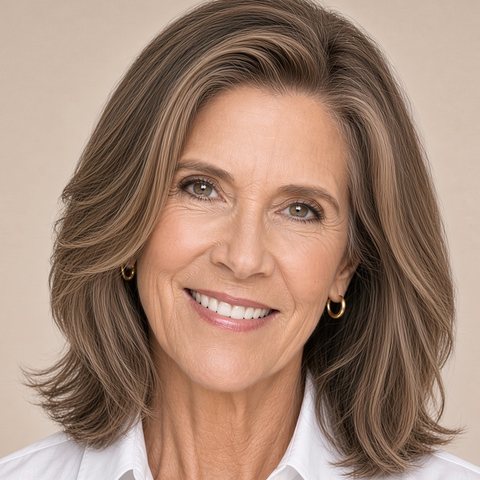
"I help adult children who are worn out caring for an aging parent find relief from the guilt, make hard decisions with clarity, and take care of themselves along the way."
Ginny is a licensed clinical mental health counselor and registered nurse with more than 30 years of experience helping people. Her nursing career included both rehabilitation and hospice nursing, so she understands illness, recovery, and end-of-life care — and the families who walk through them alongside a loved one. She earned her BSN from Emory University and her MA in Counseling from Liberty University, and she brings a warm, whole-person approach that pays attention to mind, body, and spirit. Ginny is currently accepting new clients, in person in Raleigh and by telehealth across North Carolina. Read more about Ginny and our practice.
Fees and getting started
Getting started begins with a free 10-minute phone consultation — a low-pressure call to share what's going on and see whether we're the right fit. Family Life Resources is a private-pay practice: your first full session is $200 for 65 minutes, and ongoing individual sessions are $160 for 50 minutes. We provide superbills you can submit for possible out-of-network reimbursement, and HSA/FSA cards are accepted. See fees and insurance details, or contact us to schedule your free consultation. If caregiving is straining your marriage, our marriage and couples counseling may also help.